gaeng som is one of those dishes I make when I want something bright, cozy, and a little bit bold, but I do not want to babysit a pot for hours. Maybe you have been stuck in the same dinner loop too, like chicken again, pasta again, something that tastes fine but does not wake you up. This is the kind of meal that snaps you out of that rut with sour, spicy, and savory all in one bowl. It is also surprisingly forgiving, especially once you know the basic balance. If you have ever wanted a Thai style curry that feels light but still satisfying, this is it. 
What is a sour curry anyway?
If you have only had creamy curries, sour curry can sound confusing. Think of it as a curry that skips the coconut milk and leans into a tangy broth instead. The sourness usually comes from **tamarind**, sometimes lime, and sometimes other sour fruits depending on the region.
The flavor is the whole point. It is punchy and clean, and it makes vegetables taste more exciting. I love it on hot days, but honestly I make it year round because it feels like a reset meal when everything else is feeling heavy.
If you are trying to picture the vibe, it is like soup meets curry. The broth is thin, but not boring. It is built on a curry paste plus sour and salty notes that make you keep going back for another spoon.
Also, if you enjoy Thai home cooking, you might like browsing simple sides too. I sometimes pair this with a small plate from my kitchen notes, like this easy Thai style cucumber salad when I want something cool and crunchy next to the heat.
Differences of Thai Gaeng Som
Thai food is not one single flavor profile, and gaeng som is a perfect example. You will see different versions depending on where you are and who is cooking.
In Southern Thailand, it is often spicier and more intense. In Central Thailand, it might be a bit gentler and sometimes slightly sweeter. Some households thicken the curry with a little mashed fish or cooked vegetables, while others keep it very brothy.
Here are a few differences you might notice:
- Protein choice: shrimp is super common, but fish is also popular, and some people go vegetarian with tofu.
- Veggies: green papaya, cabbage, morning glory, long beans, and even pineapple show up depending on the cook.
- Sour source: tamarind is classic, but some versions use lime or local sour fruit.
- Spice level: it can range from medium to very spicy, especially in the south.
The main thing is that it should taste like a real push and pull: sour first, then salty, then heat, with a little sweetness only if needed to round it out. And yes, this is a dish where tasting as you go is not optional.
“I tried this at a friend’s house and thought it would be hard to make. Your steps made it feel totally doable, and the flavor came out just like I remembered. Tangy, spicy, and so comforting.”
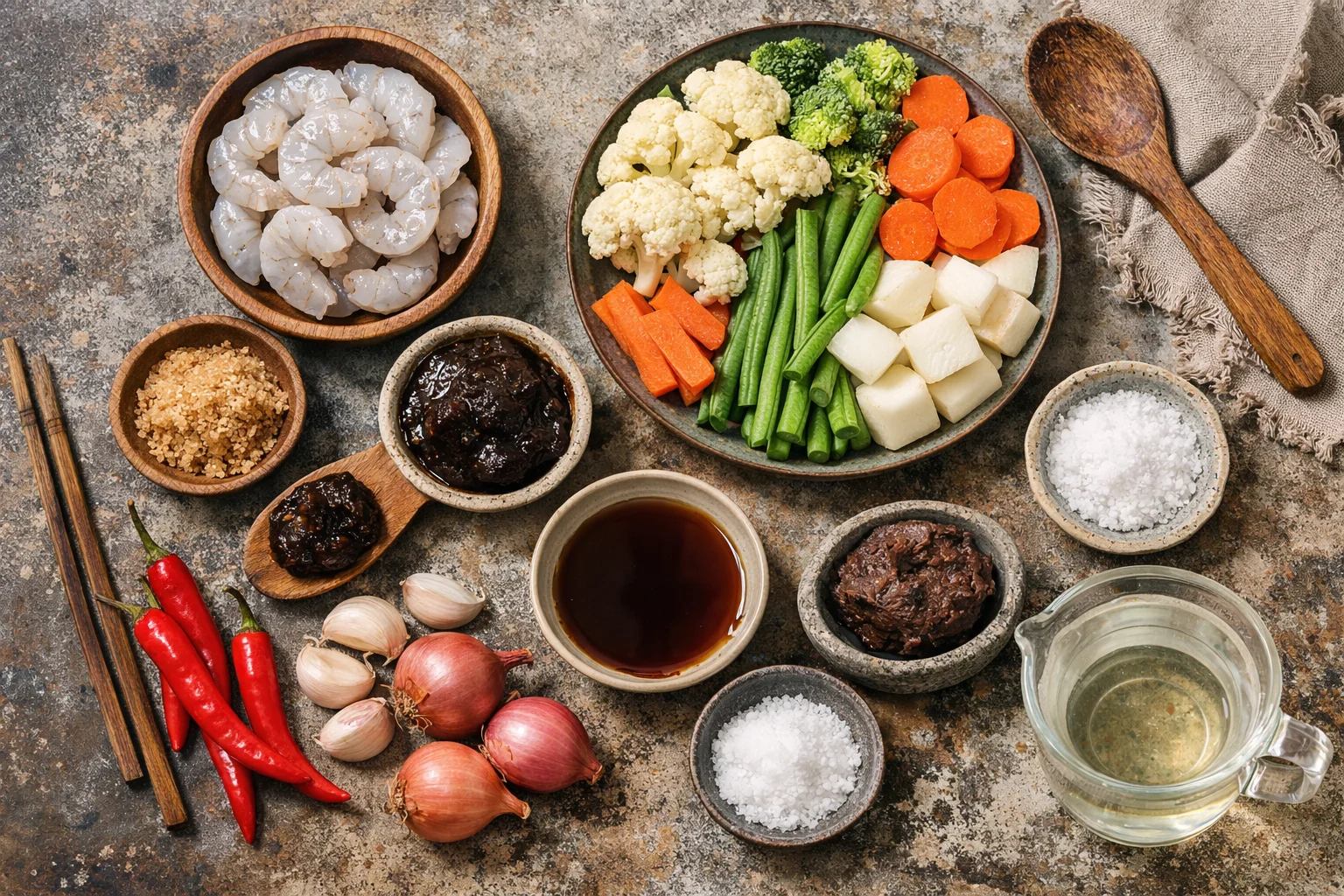
Here are the ingredients you’ll need
This is my easy, weeknight friendly list. I am going to keep it realistic, because I am not always running around town for rare items. If you can get tamarind and a decent curry paste situation going, you are already in great shape.
The core ingredients (my go to list)
- Shrimp peeled and deveined, about 1 pound. You can swap fish or tofu.
- Vegetables about 3 to 4 cups total. I love green beans plus cabbage, or green papaya if I find it.
- Tamarind paste 2 to 3 tablespoons, adjust to taste.
- Fish sauce 1 to 2 tablespoons, to taste.
- Palm sugar or brown sugar 1 to 2 teaspoons, optional, just to balance.
- Water or light stock about 5 to 6 cups.
Now for the curry paste. You can go homemade or semi homemade. I do both depending on the day.
For the quickest path, use a Thai gaeng som paste if you can find it. If you cannot, do a simple blend that still gets you close. Here is my “good enough but actually great” shortcut blend:
Quick paste idea: red chilies or chili paste, garlic, shallot, a little shrimp paste (optional), and salt. Pound or blend with a splash of water.
One more practical tip: buy shrimp with shells if you can, and simmer the shells in your water for 10 minutes, then strain. It adds flavor without extra work. I do it when I have time, and I skip it when I do not.
If you are building a Thai dinner night, I also like having a simple starch ready. This how to cook jasmine rice guide is the kind of thing I send to friends who want rice that is fluffy and not mushy.
Cooking method
This is the part where you will feel like you have your life together, because it comes together fast. The main thing is to avoid overcooking the shrimp. Nobody wants rubbery shrimp, right?
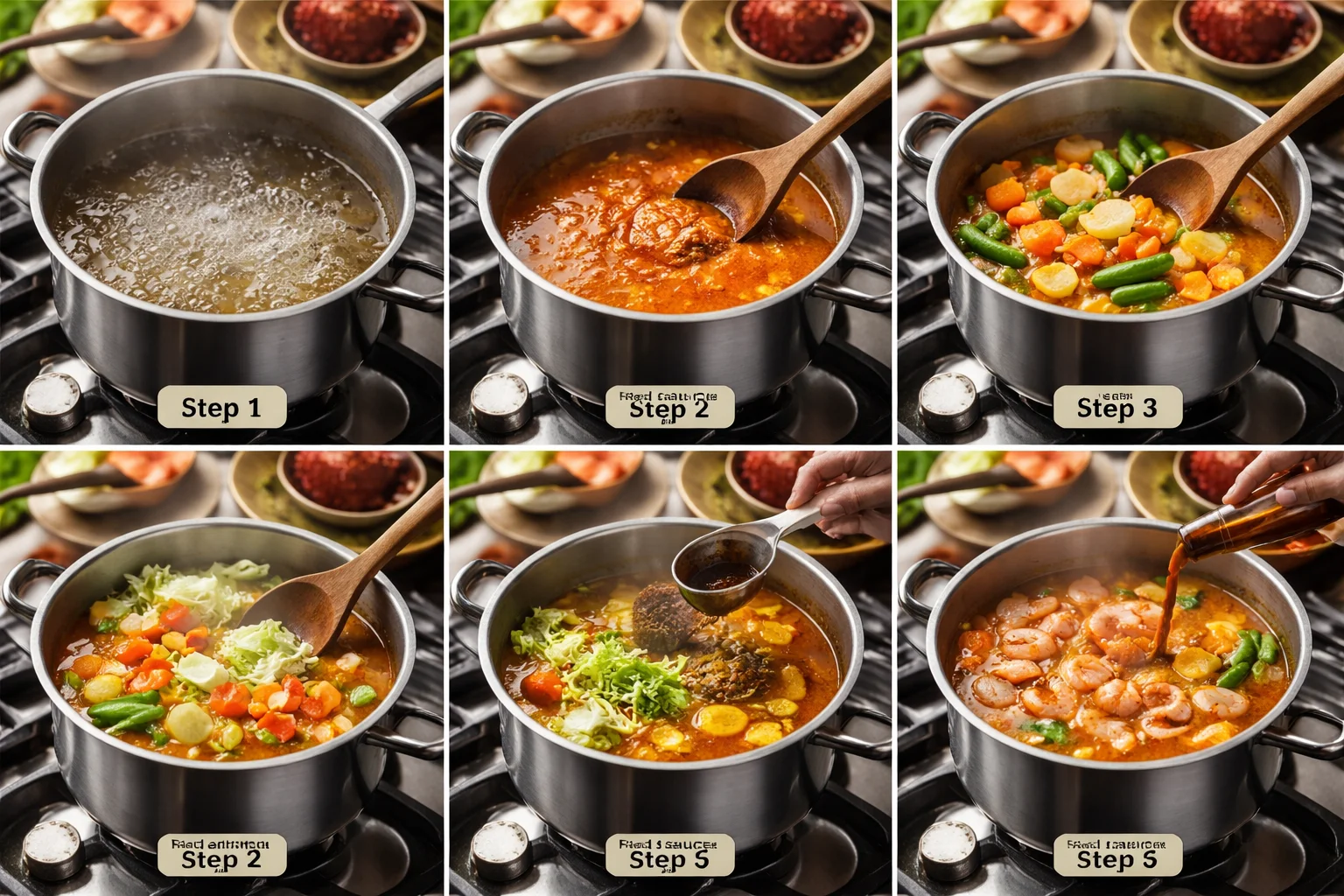
Step by step, no stress
- Bring your water or light stock to a gentle boil in a medium pot.
- Stir in your curry paste. Let it simmer 3 to 5 minutes so it loses that raw edge.
- Add firm vegetables first, like green beans or green papaya. Simmer until they are almost tender.
- Add softer vegetables, like cabbage. Cook 2 to 3 minutes.
- Stir in tamarind paste, then fish sauce. Taste carefully.
- If it feels too sharp, add a tiny bit of sugar. If it feels flat, add a touch more fish sauce. If it is not sour enough, add more tamarind.
- Add shrimp last. Cook just until pink, usually 2 to 3 minutes.
Taste and adjust is the heart of this dish. I always aim for this order when fixing it:
sour first, then salty, then heat, and sweetness only if it needs smoothing out.
If you accidentally made it too sour, do not panic. Add a little more water and a small splash of fish sauce, then re taste. If it is too spicy, more broth and more vegetables help a lot.
I usually serve gaeng som with rice, and sometimes I add fresh cucumber slices on the side because it cools everything down. Leftovers keep well for a day or two, but the vegetables get softer, so it becomes more like a cozy soup situation.
History
Gaeng som has deep roots in Thai home cooking, and it is one of those dishes that tells you a lot about a place. It is practical, it uses what is available, and it is built around bold flavors that wake up simple ingredients.
Historically, sour elements like tamarind were used a lot in regional cooking, partly because they store well and add instant brightness. Seafood versions make sense too, especially in coastal areas, where shrimp and fish are everyday staples. Over time, families adapted it based on what they had, which is why there is no single correct pot of gaeng som.
I like that story, because it takes pressure off. You are not trying to recreate a restaurant plate with perfect garnish. You are making a real bowl of food that is meant to be eaten at home, maybe a little sweaty, definitely satisfied.
If you are cooking this for the first time, you are kind of stepping into that long tradition of flexible, practical Thai cooking. And that is a pretty cool feeling for a weeknight.
Common Questions
Can I make gaeng som vegetarian?
Yes. Use tofu or just vegetables, swap fish sauce for soy sauce or a vegetarian fish sauce alternative, and keep the tamarind for that signature tang.
What vegetables work best?
Green beans, cabbage, carrots, zucchini, and green papaya are great. Pick a mix of firm and soft so everything cooks evenly.
Is gaeng som supposed to be very spicy?
It can be, but it does not have to be. Start with less curry paste, then add more after you taste. You can always make it hotter, but it is harder to undo.
How do I store and reheat it?
Store in the fridge in a sealed container for up to 2 days. Reheat gently on the stove until hot. Try not to boil it hard, especially if there is shrimp inside.
My soup tastes flat, what should I do?
Add a little more tamarind for sour, fish sauce for salt, or a touch more paste for heat. Usually it is missing one of those, not all of them.
A bowl you will actually crave again
If your dinners have been feeling repetitive, gaeng som is an easy way to bring your taste buds back to life. It is quick, flexible with ingredients, and the sour spicy broth is honestly addictive once you get the balance right. Keep tamarind, fish sauce, and a curry paste option around and you can pull this off almost anytime. Try it once, adjust it to your taste, and you will find your own “this is my house version” rhythm fast. Let me know how your gaeng som turns out, and do not be surprised if you start craving it on random Tuesdays. 
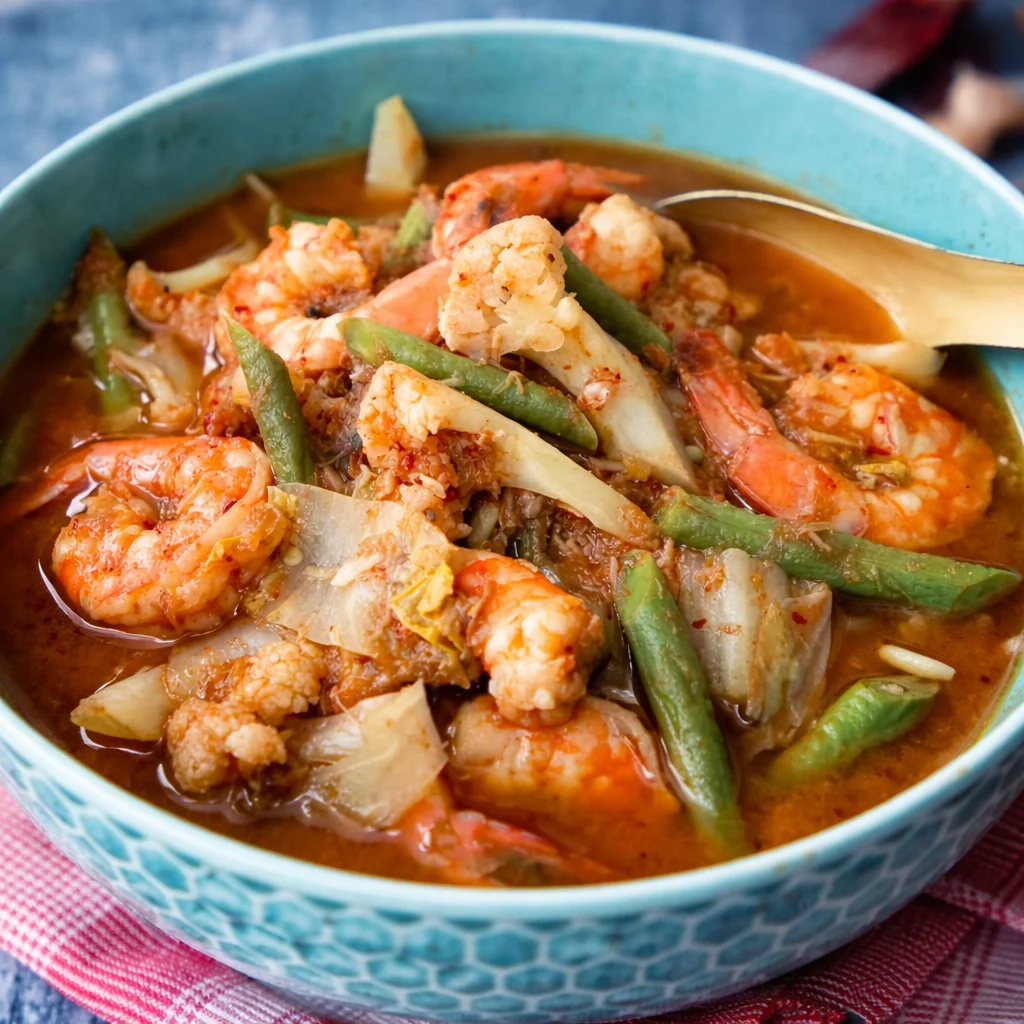
Gaeng Som
Ingredients
Method
- Bring water or light stock to a gentle boil in a medium pot.
- Stir in the curry paste and let it simmer for 3 to 5 minutes.
- Add firm vegetables first (e.g., green beans or green papaya) and simmer until almost tender.
- Add softer vegetables (e.g., cabbage) and cook for 2 to 3 minutes.
- Stir in tamarind paste and fish sauce. Taste and adjust flavors.
- Add shrimp last and cook just until pink, usually 2 to 3 minutes.
- Serve Gaeng Som with rice and optional fresh cucumber slices on the side.