kanom jeen namya is the kind of meal I crave when I want something cozy but still bright and exciting. You know those days when you are hungry, a little tired, and you want dinner to feel like a warm hug but not boring? This is that dish for me. Soft rice noodles, a creamy fish curry, and a pile of crunchy veggies on the side makes everything feel balanced. It is also surprisingly doable at home, even if you are not someone who makes Thai food every week. Let me walk you through how I make it in my own kitchen, in a very normal, not fancy way.
What is kanom jeen namya?
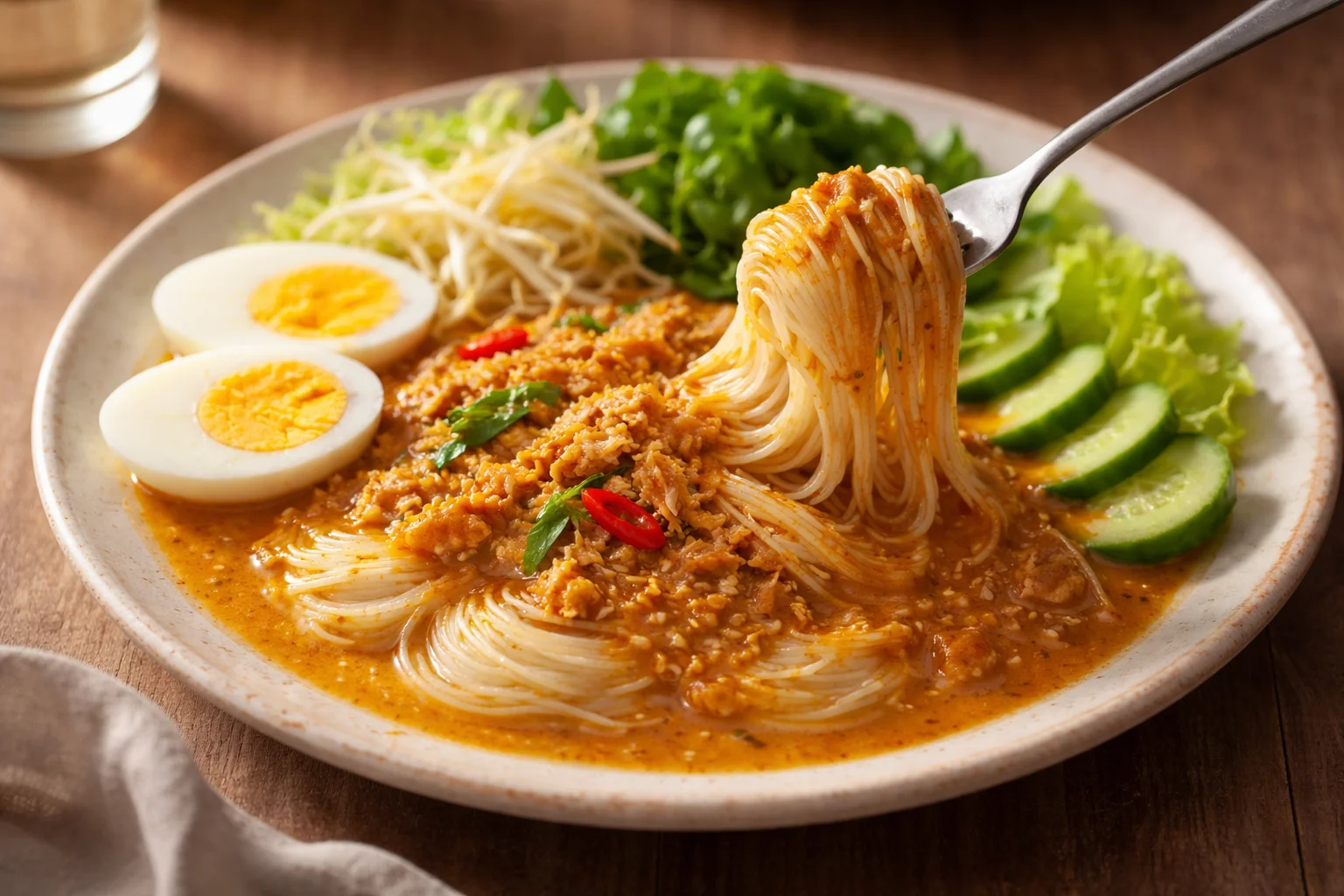
So, what exactly are we talking about? kanom jeen namya is a Thai dish built around kanom jeen, which are soft fermented rice noodles, topped with namya, a rich curry that is usually made with fish and coconut milk. Then you serve it with lots of fresh things on the side, like cabbage, bean sprouts, long beans, cucumber, and herbs.
What I love is how it feels like you get to build your own perfect bite. A little noodle, a good spoon of curry, then something crunchy and fresh. It is comforting, but not heavy in a sleepy way. If you have ever had Thai curries and wished you could eat them with noodles more often, this is your moment.
At home, I treat it like a weekend comfort bowl. Not because it is hard, but because it is fun and it smells amazing while it cooks. And if you have leftovers, it is even better the next day.
Ingredients you’ll need
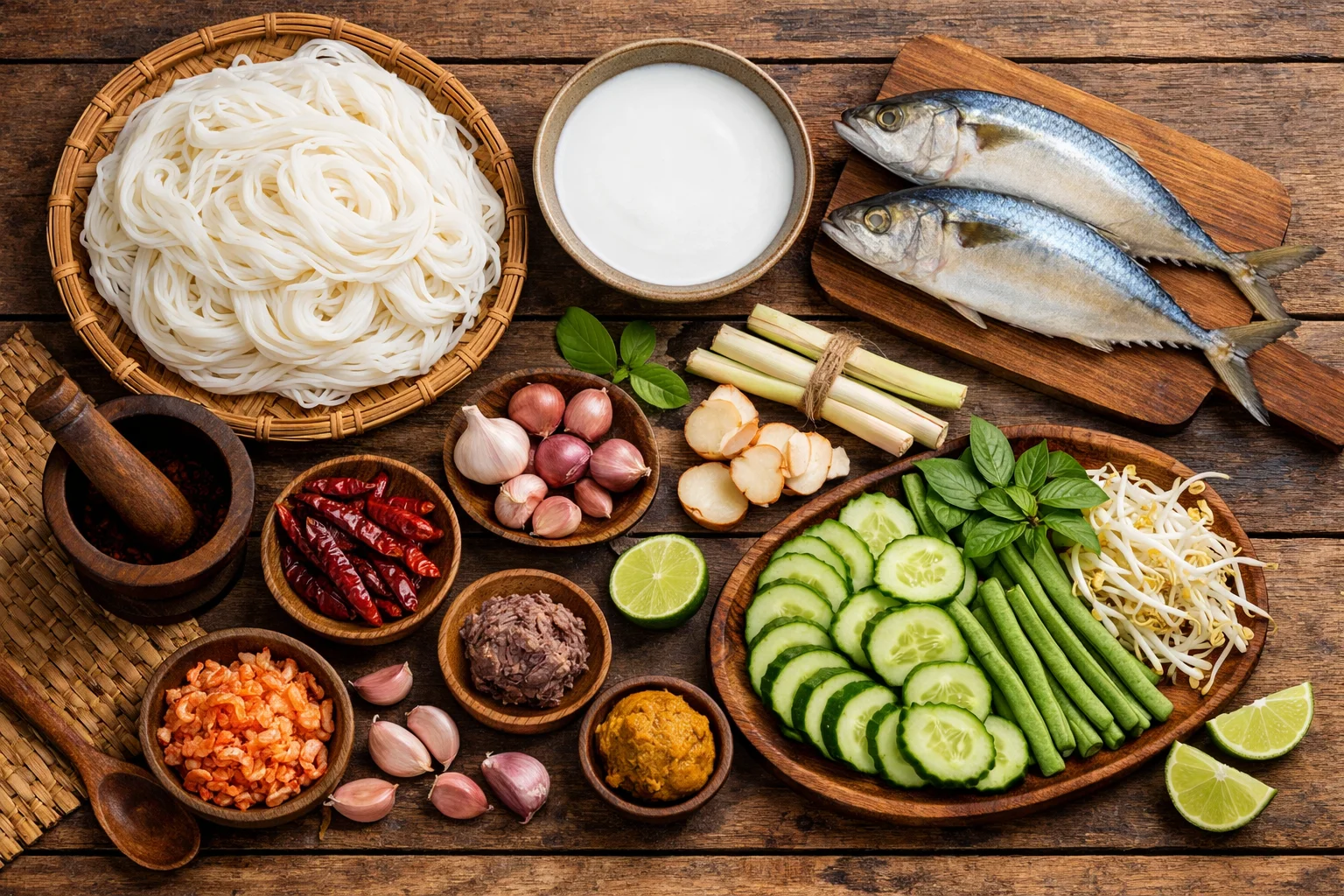
This is one of those recipes where the ingredient list looks long, but most of it is very normal if you cook Thai food even a little. I will keep it simple and tell you what matters most. If you cannot find one herb, do not panic. You can still make a delicious bowl.
The key shopping list
- Kanom jeen noodles (fresh is best, but dried rice vermicelli can work in a pinch)
- White fish like mackerel, tilapia, or cod (something not too oily)
- Coconut milk (more on this later because it matters)
- Thai curry paste ingredients: dried chilies, garlic, shallots, lemongrass, galangal (or ginger), kaffir lime zest (optional), cilantro roots or stems
- Shrimp paste (optional but very traditional, a little goes a long way)
- Fish sauce, salt, palm sugar (or brown sugar), and lime
- Optional vegetables and herbs for serving: cabbage, cucumber, long beans, bean sprouts, Thai basil, mint
I usually grab a couple of extra limes because someone in my house always wants more acidity. Also, if you like exploring Thai noodles, you might also enjoy this link on my site: Thai noodle favorites to try at home. It is a nice little rabbit hole when you are in a noodle mood.
“I tried your kanom jeen namya method for a family lunch and everyone went back for seconds. The curry tasted like the Thai place we love, but fresher.”
– Mia, home cook and fellow curry fan
Prepare the fish
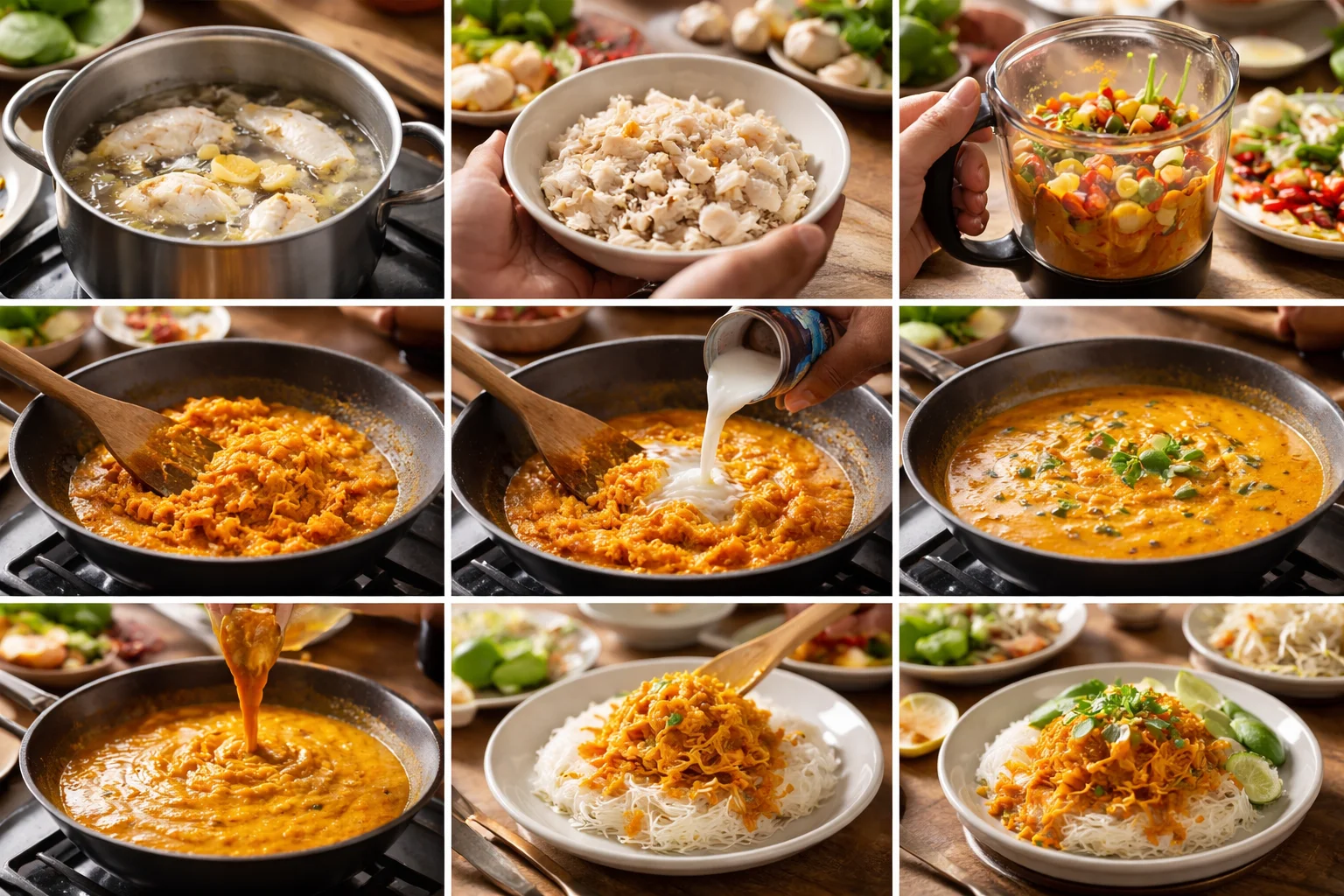
Fish can make people nervous, but this part is honestly gentle and forgiving. The goal is tender cooked fish that you can flake easily, because it will melt into the curry and give it that signature savory taste.
Here is my easy approach. I simmer the fish in water with a pinch of salt and a few slices of galangal or ginger if I have it. Some people add lemongrass too. Keep the heat low enough that the fish cooks calmly, not violently. Once it is done, lift it out and let it cool.
My low stress fish tips
These are the little things that keep it smooth:
Tip 1: Do not overcook it. As soon as it flakes easily, it is ready.
Tip 2: Save a bit of the cooking liquid. It can loosen the curry later if needed.
Tip 3: Remove bones carefully if you are using mackerel. I do this slowly with my fingers while listening to music, it is oddly relaxing.
After it cools, flake it into a bowl. Some traditional versions pound the fish until very fine. I usually just flake it well and break it up with a spoon. It still turns out delicious and homey, which is the vibe I want.
Make the curry paste
This is the part that makes your kitchen smell like you know what you are doing, even if you are just winging it. You can use a mortar and pestle if you want the full experience, but I use a small food processor most days because I live in the real world and I like my arms.
First, soften dried chilies in warm water for about 10 to 15 minutes, then squeeze them out. If you want it mild, use fewer chilies and remove more seeds. Then blend together chilies, garlic, shallots, lemongrass, galangal or ginger, and cilantro stems. If you are using shrimp paste, add a small spoon. It smells strong on its own, but once it cooks into the curry it becomes that deep, savory background note.
Now cook the paste in a pot with a bit of coconut cream or a spoon of thick coconut milk until it looks glossy and smells fragrant. This step is worth it. It is where the raw sharpness turns into something warm and inviting.
Once the paste is cooked, add the flaked fish and stir it around. Then pour in coconut milk and let it gently simmer. Season with fish sauce and a little sugar. Taste as you go. I always end up doing a tiny lime squeeze at the end because I like that pop.
If you want a side idea for serving this with something crunchy and bright, I also have a simple guide you can check out here: easy Thai style cucumber salad. It is one of my favorite quick pairings when the curry feels extra rich.
What you should know about coconut milk
Coconut milk can make or break this curry, so let us talk about it like friends. Not all cans are the same. Some are thin and watery, and some are thick and creamy. For kanom jeen namya, you want the richer one if you can get it, because the curry is supposed to feel silky and comforting.
My rule is: shake the can and listen. If it sounds like straight liquid, it might be thin. If it feels heavy and you can see a thick layer when you open it, that is the good stuff. I often use one can of full fat coconut milk, and if I want it extra lush, I add a bit of coconut cream.
Also, do not blast it on high heat for a long time. Coconut milk can split if you boil it aggressively. Keep it at a gentle simmer, stir often, and you will be fine.
And yes, you can make it lighter, but I would not make it too skinny. This dish is meant to be comforting. If you need to stretch it, use a bit of the fish cooking liquid instead of adding more coconut milk.
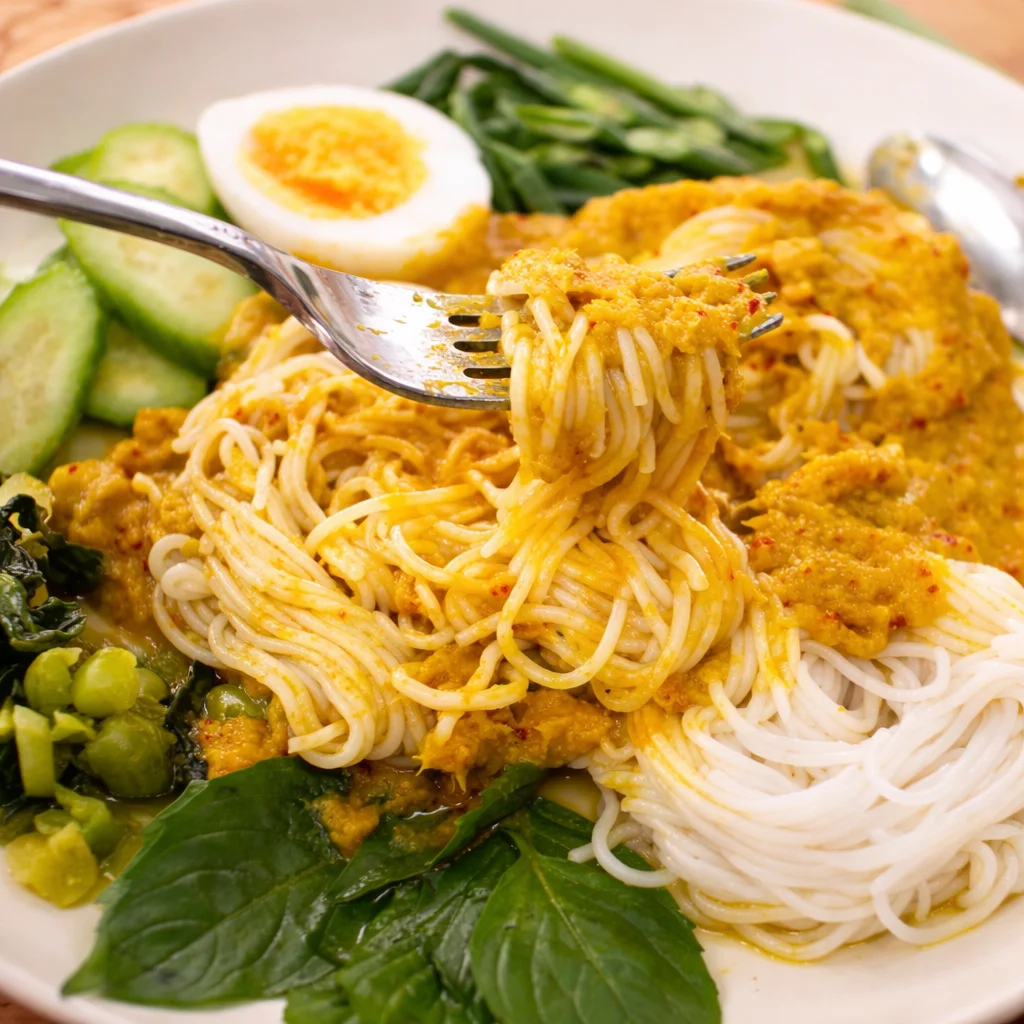
When you are ready to eat, spoon the curry over the noodles and put out your vegetables and herbs. The crunch and freshness is not just decoration, it is part of what makes kanom jeen namya so addictive.

Common Questions
Can I use canned fish instead of fresh fish?
You can, especially in a pinch. Choose something mild like canned mackerel in water. The flavor will be a bit different, but still tasty. Just drain it well and break it up before adding.
What noodles can I substitute if I cannot find kanom jeen?
Rice vermicelli works. It will not have the exact texture, but it still carries the curry nicely. Cook it until just soft, then rinse quickly to stop it from getting mushy.
How spicy is this dish supposed to be?
It can range from mild to pretty spicy. Control it by using fewer dried chilies and removing seeds. You can also add spice at the table with chili flakes if some people want more heat.
Can I make the curry ahead of time?
Yes, and it is actually great the next day. Store the curry separate from the noodles. Reheat gently so the coconut milk stays smooth.
What vegetables should I serve with it if I am keeping it simple?
Cabbage and cucumber are the easiest. Add bean sprouts if you like crunch, and a handful of herbs if you have them. Even just two fresh sides makes a big difference.
A cozy bowl worth making at home
If you have been stuck in a dinner rut, kanom jeen namya is a really satisfying way to shake things up without making life complicated. You get creamy curry, tender fish, soft noodles, and that fresh crunchy contrast all in one meal. Take it one step at a time, taste as you go, and do not stress about making it perfect. Once you try it, you will understand why it feels like such a comforting Thai classic. I hope you make it soon and end up licking the spoon like I always do.
Kanom Jeen Namya
Ingredients
Method
- Prepare the fish by simmering it in water with a pinch of salt and slices of galangal or ginger on low heat until it flakes easily.
- Once cooked, remove the fish and let it cool, then flake it into a bowl.
- Soak dried chilies in warm water for 10-15 minutes to soften.
- Blend chilies, garlic, shallots, lemongrass, galangal or ginger, and cilantro roots in a food processor.
- Cook the curry paste in a pot with a bit of coconut cream until glossy and fragrant.
- Add the flaked fish and stir well.
- Pour in coconut milk and let it gently simmer.
- Season with fish sauce and palm sugar, adjusting flavors as needed.
- Spoon the curry over the cooked kanom jeen noodles and serve immediately with fresh vegetables and herbs on the side.